

Hey there! As a supplier of warp knitting spandex yarn, I often get asked about the friction coefficient of this awesome material. So, let's dive right in and explore what the friction coefficient of warp knitting spandex yarn is all about.
First off, what exactly is the friction coefficient? Well, in simple terms, it's a measure of how much two surfaces resist sliding against each other. For warp knitting spandex yarn, this coefficient plays a crucial role in the knitting process and the performance of the final product.
When it comes to warp knitting, the friction between the spandex yarn and the knitting machine's components can significantly affect the knitting speed, quality, and efficiency. If the friction coefficient is too high, the yarn might break more easily, leading to production disruptions and increased waste. On the other hand, if it's too low, the yarn might not hold its position properly during knitting, resulting in uneven fabric or other quality issues.
The friction coefficient of warp knitting spandex yarn is influenced by several factors. One of the main factors is the surface properties of the yarn. Spandex yarns can have different finishes and textures, which can affect how they interact with other surfaces. For example, a smooth - finished yarn might have a lower friction coefficient compared to a yarn with a more textured surface.
The composition of the spandex also matters. Different types of spandex polymers can have different levels of friction. Some spandex materials are formulated to have better lubricity, which can reduce the friction coefficient. Additionally, the presence of additives in the yarn can also impact its friction characteristics. For instance, anti - static additives can sometimes change the surface charge of the yarn, which in turn can affect the friction between the yarn and other materials.

The environmental conditions during knitting also play a role. Temperature and humidity can have a significant impact on the friction coefficient. In high - humidity environments, the yarn might absorb moisture, which can change its surface properties and increase the friction. Similarly, extreme temperatures can cause the spandex to expand or contract, altering its interaction with the knitting machine parts.
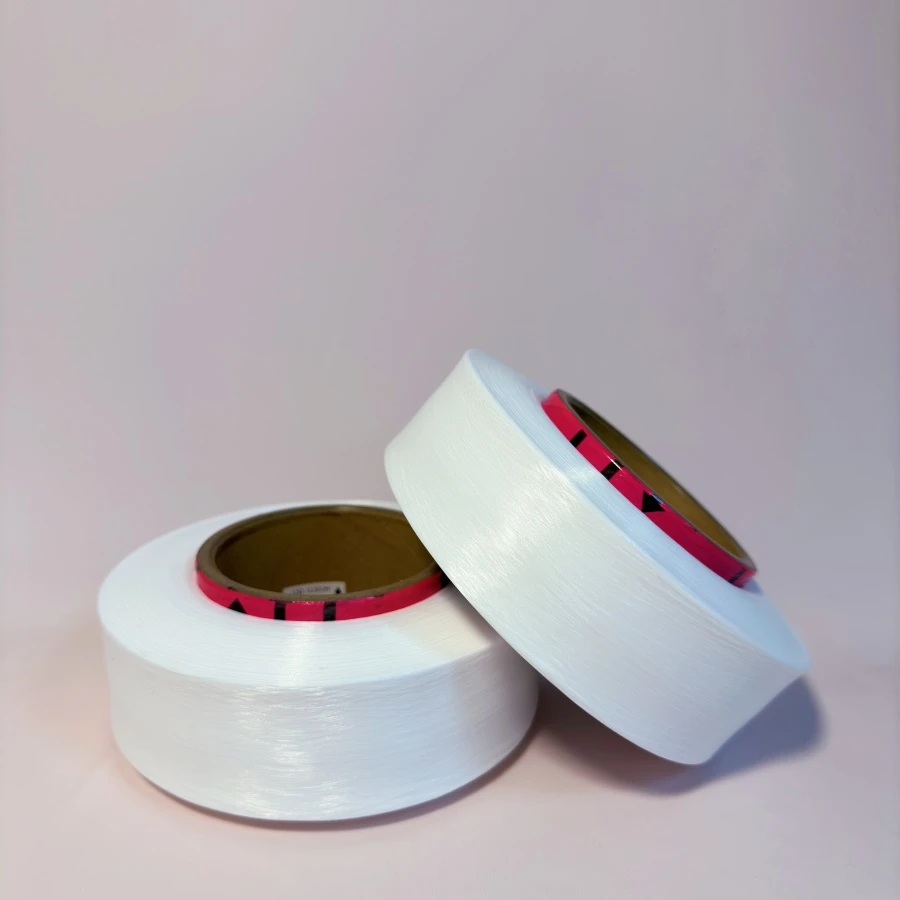
Now, let's talk about how the friction coefficient affects the performance of our warp knitting spandex yarn products. We offer a range of products, like the 40D (40505) Spandex Yarn AA Grade, the 210D (21203) Spandex Yarn AA Grade, and the 70D (70505) Spandex Yarn AA Grade. Each of these yarns has been carefully engineered to have an optimal friction coefficient for warp knitting.
The 40D yarn, for example, is a popular choice for applications where fine details and a soft feel are required. Its friction coefficient is tuned to ensure smooth knitting on high - speed machines, allowing for efficient production of delicate fabrics. The 210D yarn, with its higher denier, is more suitable for heavier - duty applications. The friction characteristics of this yarn are designed to handle the increased tension and stress during knitting, resulting in a strong and uniform fabric.
The 70D yarn strikes a balance between the two. It can be used in a wide range of applications, from sportswear to lingerie. The friction coefficient of the 70D yarn is adjusted to provide versatility, enabling it to be knitted on different types of machines with consistent results.
To measure the friction coefficient of our warp knitting spandex yarn, we use specialized testing equipment. These tests are conducted under controlled conditions to ensure accurate and repeatable results. We test the yarn against different surfaces that are commonly found in knitting machines, such as metal guides and ceramic eyelets. By measuring the force required to move the yarn across these surfaces, we can calculate the friction coefficient.
Once we have the test results, we can make adjustments to our production processes if necessary. If the friction coefficient is outside the desired range, we can modify the yarn's finish, composition, or other properties to bring it back into the optimal range. This continuous quality control process ensures that our customers receive yarns that perform consistently and meet their production requirements.
If you're in the market for warp knitting spandex yarn, it's essential to consider the friction coefficient. Choosing a yarn with the right friction characteristics can save you time and money in the long run. You'll experience fewer production problems, higher - quality fabrics, and more efficient knitting operations.
Whether you're a small - scale knitting workshop or a large - scale textile manufacturer, we've got the right warp knitting spandex yarn for you. Our team of experts is always ready to help you select the best product based on your specific needs. If you have any questions about the friction coefficient of our yarns or need advice on which product is suitable for your application, don't hesitate to reach out. We're here to assist you every step of the way to ensure a successful knitting experience.
In conclusion, the friction coefficient of warp knitting spandex yarn is a critical factor that affects both the knitting process and the final product quality. By understanding the factors that influence it and carefully controlling it during production, we can offer high - quality yarns that meet the diverse needs of our customers. So, if you're looking for reliable warp knitting spandex yarn, get in touch with us and let's start a conversation about how we can meet your requirements.
References
- Textile Technology Handbook: Spandex Yarn Properties and Applications
- Journal of Textile Engineering: Friction Characteristics of Synthetic Yarns in Knitting Processes
- Spandex Manufacturing and Quality Control Manual