

As a supplier of warp knitting spandex yarn, I've witnessed firsthand the significant role that spandex content plays in determining the stretchability of the yarn. In this blog, I'll delve into the science behind this relationship, exploring how different spandex contents can impact the performance of warp knitting spandex yarn in various applications.
Understanding Spandex and Its Properties
Spandex, also known as elastane, is a synthetic fiber renowned for its exceptional elasticity. It can stretch up to 5-7 times its original length and quickly return to its initial shape without losing its form. This unique property makes spandex an ideal material for applications where stretch and recovery are crucial, such as sportswear, lingerie, and medical garments.
In warp knitting spandex yarn, the spandex content refers to the percentage of spandex fibers within the yarn. The remaining portion typically consists of other fibers, such as nylon or polyester, which provide additional strength, durability, and stability. The combination of spandex and other fibers allows manufacturers to create yarns with specific properties tailored to different end - uses.
Impact of Spandex Content on Stretchability
Higher Spandex Content: Greater Stretchability
When the spandex content in warp knitting spandex yarn is increased, the yarn's stretchability also improves significantly. Yarns with a high spandex content, say 20% or more, can stretch much further than those with a lower spandex percentage. This is because spandex fibers are highly elastic, and a larger proportion of them in the yarn means there are more elastic components available to stretch under tension.
For example, our 210D (21203) Spandex Yarn AA Grade has a relatively high spandex content. This yarn is capable of stretching to a great extent, making it perfect for applications where extreme stretch is required, like form - fitting sportswear. Athletes need clothing that can move with their bodies during intense physical activities, and a high - spandex - content yarn ensures that the garment can stretch and recover without restricting movement.
Lower Spandex Content: Reduced Stretchability but Increased Stability
On the other hand, yarns with a lower spandex content, perhaps around 5 - 10%, have more limited stretchability. However, they offer other advantages. The presence of a higher proportion of non - spandex fibers, such as nylon or polyester, provides the yarn with greater strength and stability.
Our 70D (70505) Spandex Yarn AA Grade has a lower spandex content compared to the 210D yarn. While it doesn't stretch as much as the higher - spandex - content yarns, it is more resistant to abrasion and has better shape - retention over time. This makes it suitable for applications where a moderate amount of stretch is needed along with durability, like in some types of everyday wear or industrial fabrics.
Factors Affecting the Relationship between Spandex Content and Stretchability
Fiber Blending and Compatibility
The way spandex is blended with other fibers can also influence the yarn's stretchability. If the non - spandex fibers are not compatible with spandex, it can lead to uneven stretching and reduced performance. For instance, if the non - spandex fibers are too stiff or have different shrinkage rates compared to spandex, it can restrict the movement of the spandex fibers and limit the overall stretchability of the yarn.
Manufacturers need to carefully select the right combination of fibers and use appropriate blending techniques to ensure that the spandex and other fibers work together harmoniously. This involves considering factors such as fiber diameter, length, and surface properties to achieve the desired stretch and recovery characteristics.
Yarn Construction
The construction of the warp knitting spandex yarn, such as the twist level and the way the fibers are arranged, can impact stretchability. A higher twist level can make the yarn more compact, which may reduce its stretchability to some extent. However, it can also improve the yarn's strength and durability.
Conversely, a looser twist allows the spandex fibers to move more freely, resulting in greater stretchability. The choice of yarn construction depends on the specific requirements of the end - product. For example, a fine - gauge fabric may require a yarn with a specific twist level to ensure proper knitting and a smooth surface finish.
Testing and Quality Control
To ensure that the spandex content in warp knitting spandex yarn has the desired impact on stretchability, rigorous testing and quality control measures are essential. We at our company use advanced testing equipment to measure the spandex content accurately and evaluate the yarn's stretch and recovery properties.
One common test is the tensile test, which measures the force required to stretch the yarn to a certain length and the amount of recovery after the force is removed. This test helps us determine if the yarn meets the specified stretchability standards. We also conduct fatigue tests to simulate the repeated stretching and recovery that the yarn will experience during its lifespan.
Applications and Market Demand
The impact of spandex content on stretchability directly influences the market demand for different types of warp knitting spandex yarn. In the fashion industry, there is a growing demand for both high - stretch and moderate - stretch yarns. High - stretch yarns are popular for creating trendy, form - fitting clothing items that accentuate the body's curves.
For example, skinny jeans often use warp knitting spandex yarn with a relatively high spandex content to provide a snug fit. On the other hand, moderate - stretch yarns are in demand for more casual and comfortable clothing, such as t - shirts and dresses.
In the sportswear market, the demand for high - performance yarns with excellent stretchability is on the rise. Athletes are constantly looking for clothing that can enhance their performance and provide maximum comfort during training and competition. Our 140D(A4501) Spandex Yarn AA Grade is well - received in this market due to its balanced stretch and recovery properties.
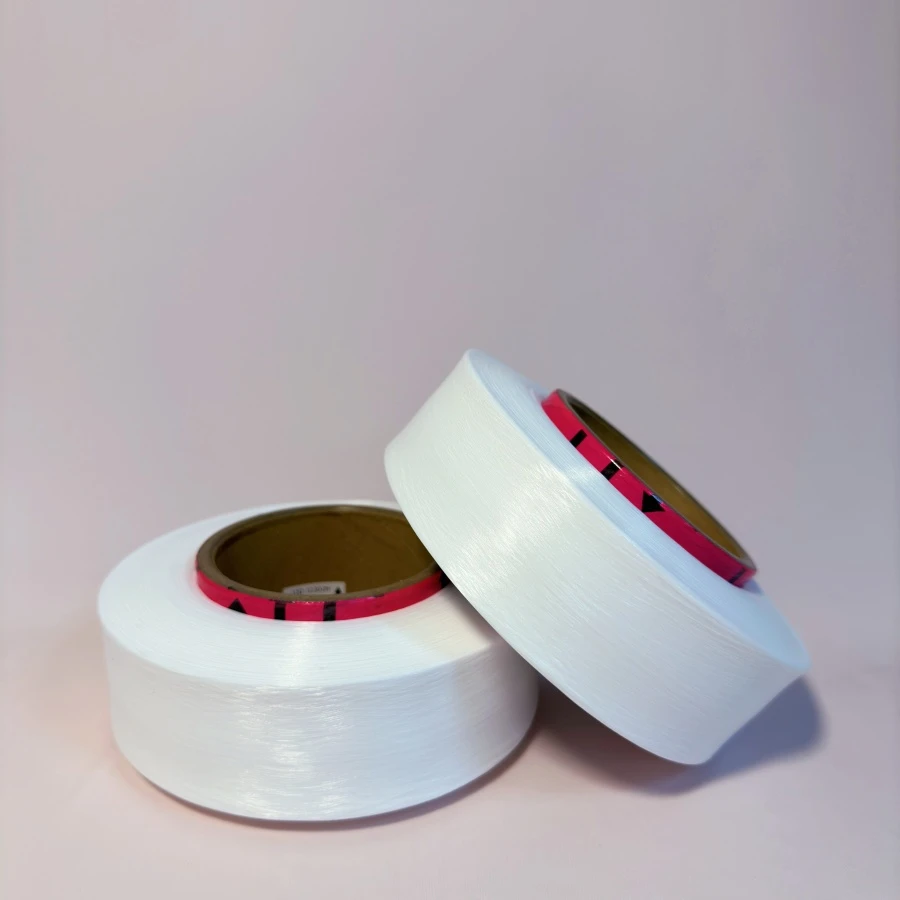

Conclusion and Call to Action
In conclusion, the spandex content in warp knitting spandex yarn has a profound impact on its stretchability. By adjusting the spandex content, manufacturers can create yarns with a wide range of stretch and recovery characteristics to meet the diverse needs of different industries.
Whether you are a fashion designer looking for the perfect yarn for your next collection or a sportswear manufacturer in search of high - performance materials, we can provide you with the right warp knitting spandex yarn. Our team of experts is ready to assist you in selecting the ideal yarn based on your specific requirements.
If you are interested in learning more about our products or would like to discuss a potential purchase, please feel free to reach out to us. We look forward to working with you to create high - quality products that meet your expectations.
References
- Morton, W. E., & Hearle, J. W. S. (2008). Physical Properties of Textile Fibres. Woodhead Publishing.
- Postle, R., & Oxenham, W. (2009). Handbook of Yarn Production: Spun and Filament Yarns. Woodhead Publishing.
- Anon. (2023). Spandex: A Technical Overview. [Publication Name].